
Commodore Edwin Ward Moore and the Texas Naval Flag: The Man Who Held the Gulf
The Texas Naval Flag, the Battle of Campeche, and the officer who enforced sovereignty

In the spring of the Texas Revolution, flags appeared quickly across the countryside. Some were stitched in homes, some raised over forts, some carried by men who did not know if they would survive the week. On land, those flags marked rebellion. At sea, they meant something more dangerous. A flag on the water was not symbolism. It was a challenge.
The 1836 Texas Naval Flag declared that Texas claimed sovereignty beyond its shoreline. That claim would have meant nothing without someone willing and able to enforce it. That person was Edwin Ward Moore.
Moore did not fight at San Jacinto. He did not sign the declaration of independence. Yet without him, the Republic of Texas might never have survived long enough to join the United States. His story is not one of speeches or politics. It is a story of discipline, conviction, and a quiet understanding that independence, once won, must still be defended.
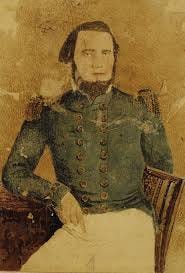
A Boy Drawn to the Sea
Edwin Ward Moore was born in 1810, at a time when the United States was still young and unsure of its place in the world. The country’s power flowed through its ports and along its coastlines. Ships carried trade, diplomacy, and force. For a young man with ambition, the sea offered both purpose and structure.
Moore entered the United States Navy while still young. Naval service in the early nineteenth century was demanding and exacting. Officers were expected to master navigation, command men under pressure, and operate within the strict boundaries of international maritime law. A ship’s flag mattered. It told the world who you were, what authority you claimed, and whether your actions were lawful or criminal.
These lessons stayed with Moore for the rest of his life.
He was not reckless. He was not impulsive. He believed deeply in order, legitimacy, and command. That belief would shape the future of Texas more than most people realize.
Texas After the Revolution
Texas declared independence in 1836, but independence did not bring security. Mexico never accepted the loss of its territory. The young republic faced threats on multiple fronts, but none were more dangerous than the Gulf of Mexico.
Control of the coast meant control of supplies, trade, and invasion routes. Mexico still possessed naval strength. Texas did not.
The first Texas Navy, authorized during the revolution, proved that naval power mattered. Mexican supply lines were disrupted. Ports were threatened. But the navy was fragile. Ships were lost, sold, or neglected as money ran out and politics interfered. By the late 1830s, Texas once again stood exposed.
This was the moment when Moore was asked to take command.
Taking Charge of the Texas Navy
In 1839, Moore accepted command of the Texas Navy. It was not an easy assignment. The republic was poor. The ships were aging. Political leaders disagreed constantly about funding and authority. Many questioned whether a navy was even necessary.
Moore did not.
He understood that without control of the sea, Texas independence existed only on paper.
From the beginning, Moore insisted that Texas naval vessels behave like the ships of a recognized nation. Crews were trained to follow strict discipline. Engagements were conducted according to international law. Most importantly, Texas ships flew their naval ensign not as a revolutionary symbol, but as a national flag.
This distinction mattered. A revolutionary banner invites sympathy. A national flag demands recognition.
Moore was not trying to make a statement. He was building credibility.
The Flag at Sea
The Texas Naval Flag represented more than resistance. It represented legitimacy. When Moore’s ships entered foreign ports, the flag signaled that Texas expected to be treated as a sovereign nation. When they encountered Mexican vessels, the flag made clear that this was not piracy. It was lawful naval action.
Moore believed that flags only matter if the world believes in the authority behind them. Every patrol, every port call, every confrontation reinforced that belief.
Texas ships began to be taken seriously.
A Test of Will at Campeche
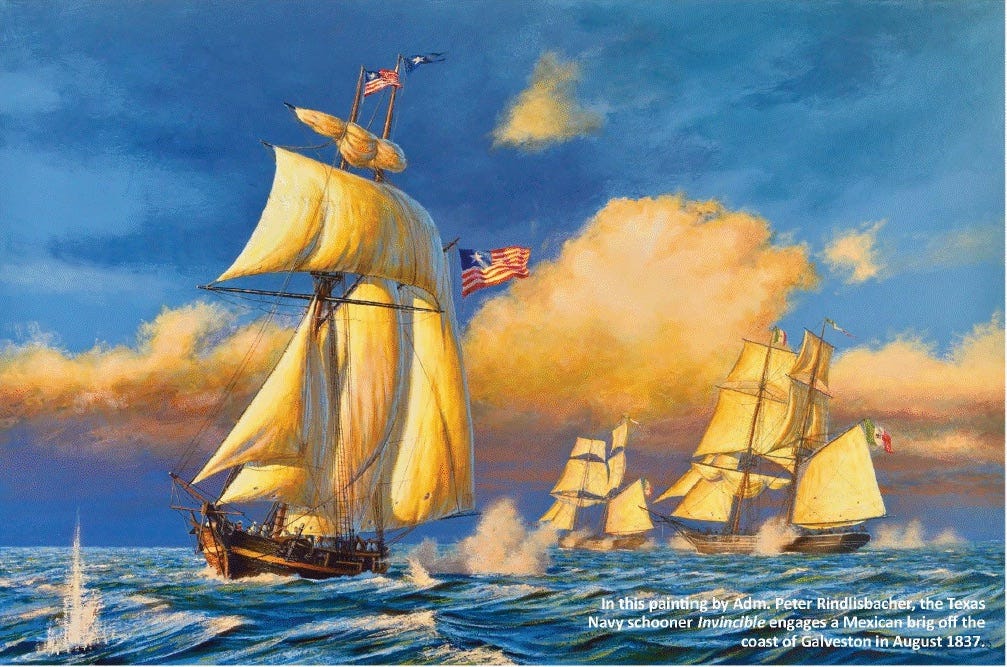
The defining moment of Moore’s command came in 1843 at the Battle of Campeche.
Mexico deployed steam-powered warships, among the most advanced naval technology of the time. Moore’s fleet relied on sailing ships, slower and vulnerable by comparison. On paper, the outcome seemed inevitable.
Moore chose to fight anyway.
Under the Texas naval flag, his ships engaged the Mexican fleet and held their ground. Through superior seamanship, coordination, and resolve, Moore’s forces forced the engagement into a stalemate. It remains the only known naval battle in history where sailing ships successfully fought steam-powered warships.
The result was not just a military achievement. It was a political one. Texas had demonstrated that it could defend its sovereignty on the open sea against a technologically superior power.
Foreign governments noticed. Mexico adjusted its strategy. The Gulf was no longer uncontested.
Independence Maintained
On land, Texas independence was decided in a single afternoon at San Jacinto. At sea, independence had to be defended every day.
Moore’s career was marked by constant tension with Texas politicians. Funding was inconsistent. Orders were unclear. At times, Moore acted without direct authorization because he believed delay would invite disaster.
These decisions made him controversial. They also made him effective.
Moore understood something fundamental. Losing control of the Gulf would invite invasion, isolate Texas diplomatically, and undermine its claim to nationhood. In his mind, naval hesitation was not caution. It was surrender.
A Complicated Legacy
Moore’s service ended amid political conflict and personal cost. He did not leave office celebrated or rewarded. History often prefers clean endings. Moore’s story is not one of neat resolution.
Yet his impact is undeniable.
Under his command, the Texas Navy preserved the republic during its most vulnerable years. The Texas Naval Flag became more than a symbol. It became proof that Texas could act, fight, and be recognized as a nation.
Without Moore, the flag remains cloth. With Moore, it became authority.
Why Moore Matters Today
In modern times, the Texas Naval Flag is often treated as a historical artifact, a reminder of a brief republic. Moore’s story reminds us that it was once a working instrument of state power.
For modern Texans and Americans, his life raises questions that still matter. What gives symbols legitimacy? When is authority earned rather than declared? How much responsibility falls on individuals willing to act before consensus forms?
Moore did not seek recognition. He sought results.
The Flag and the Man
The most honest way to understand the Texas Naval Flag is simple.
The flag declared Texas sovereignty at sea.
Edwin Ward Moore enforced that declaration.
Together, they held the Gulf long enough for Texas to survive.
That is why his story belongs at the center of Texas naval history, and why the flag he defended still matters today.